There's a disconnect between company leaders and data users.
One of the biggest—and most overlooked—drivers of poor CRM data quality is the gap in understanding between company leadership and teams working with data every day.
Sixty-eight percent of those in leadership roles believe their revenue-generating teams have the data they need to close deals.
CRM users on the ground tell a different story. They say employees at their orgs spend an average of 13 hours per week just searching for data to fulfill requests.
It gets worse.
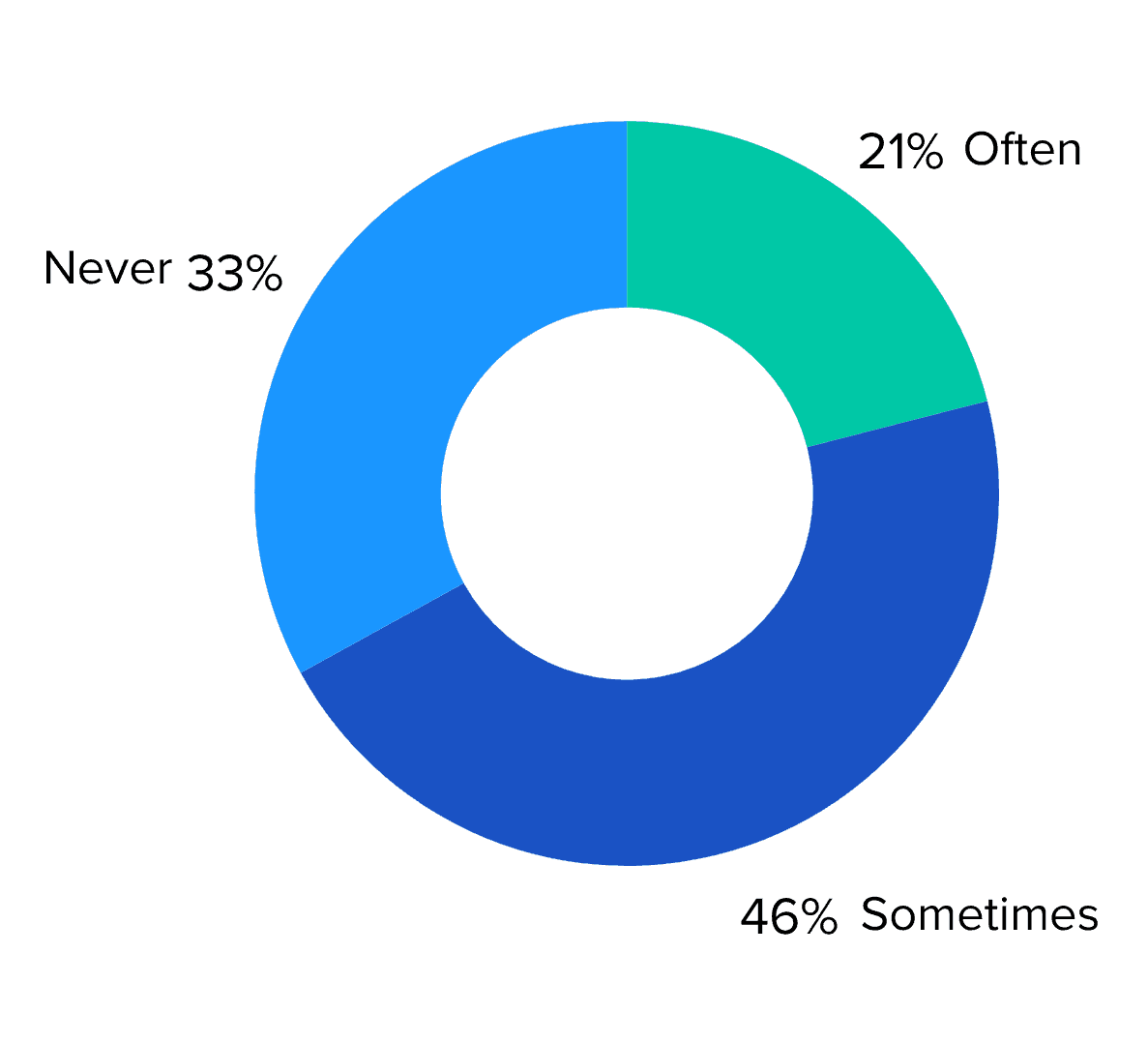
Eighty-four percent of leaders say they change their decisions when presented with countering data. Only 19 percent of CRM users say this actually happens regularly. Yikes.
When it comes to ensuring data quality, both sides are waiting for the other to step up. Thirty-four percent of leaders reported feeling frustrated by the lack of progress on data quality initiatives at their company.
Meanwhile, 37 percent of lower-level CRM users say they are frustrated by leadership failing to prioritize data quality initiatives.
Thirty-seven percent of respondents reported staff at their companies fabricate data to tell the story they think decision-makers want to hear. Alarmingly, those working in finance were 71 percent more likely than average to admit to fabrication.
This kind of data manipulation doesn’t just reflect a culture issue—it reveals a deeper structural problem. Without a holistic strategy that ensures data accuracy,
completeness, consistency, and timeliness, teams are left to fill in the gaps however they can. A modern approach to CRM data quality should span every vector—from robust governance and real-time validation to easy access to reference data and tools that deliver the right insights to the right people at the right time. Only then can organizations make confident, data-driven decisions that stand up to scrutiny.