AI Is raising the stakes for data quality
The explosion of AI tools on the market puts a spotlight on CRM data quality. While AI promises faster insights, better personalization, and smarter automation, its outputs are only as good as the data it’s fed.
The good news? Organizations are starting to recognize the connection between clean data and AI success. Ninety-four percent of respondents agree that data readiness is a critical first step in adopting AI. The bad news? Few feel truly prepared. Forty-six percent of respondents admit they are unsure how to assess the readiness of their data for AI.
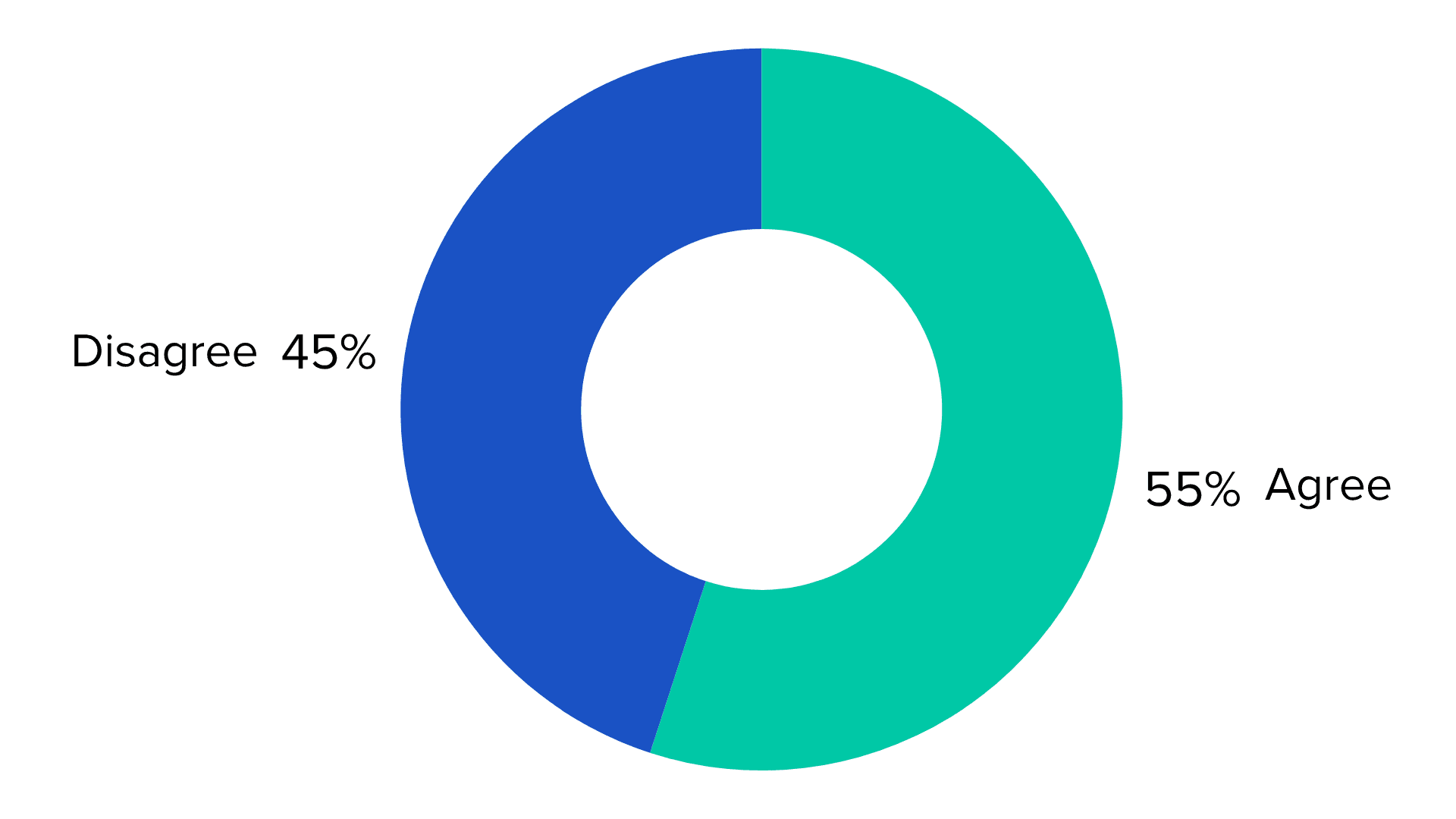
Forty-five percent say that their company’s CRM data simply isn’t prepared for AI initiatives. This statistic is troubling on its own. But it’s even more concerning given the statistic shared earlier: 76 of respondents said less than half of their organization’s CRM data is accurate and complete. With this in mind, shouldn’t far more respondents say their data isn't ready for AI?
There are a few possible reasons for the gap:
Users haven't considered the importance of clean data for AI and haven’t made data cleansing part of their AI implementation plan.
Users think AI will fix their data quality—or that AI models will “self-correct” over time and adapt to any data they receive.
Both are costly misconceptions. AI systems can’t fix biases inherent in the data they’re trained on. If the input data is flawed or unverified, the model’s outputs will mirror those flaws—often amplifying biases or generating unreliable insights.
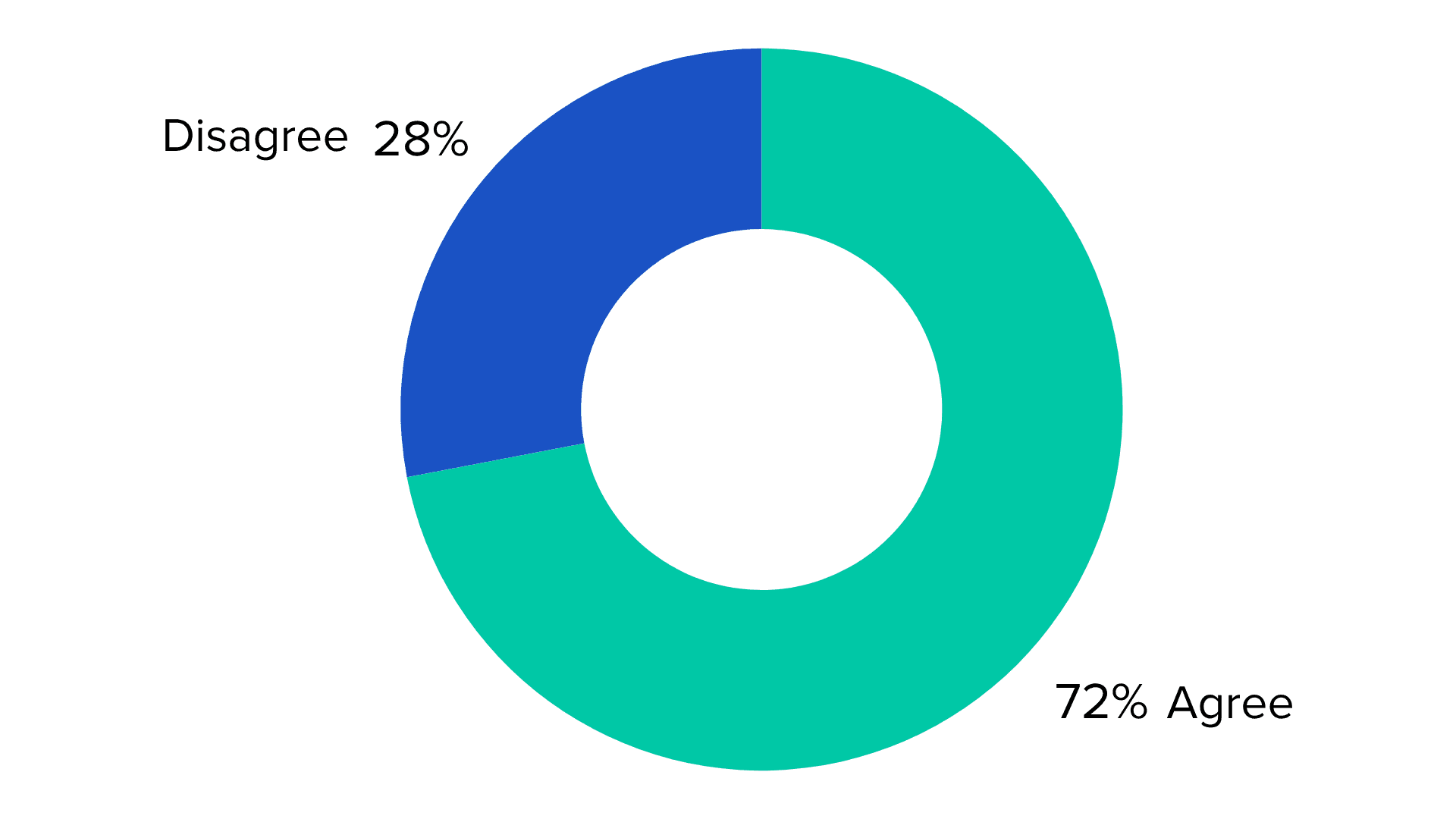
Beyond data quality issues, AI skill gaps present another obstacle. Seventy-two percent of respondents say their teams lack the AI expertise they need. It’s even harder for more experienced workers: Those with over 20 years of experience were 15 percent more likely than average to acknowledge this skill gap.
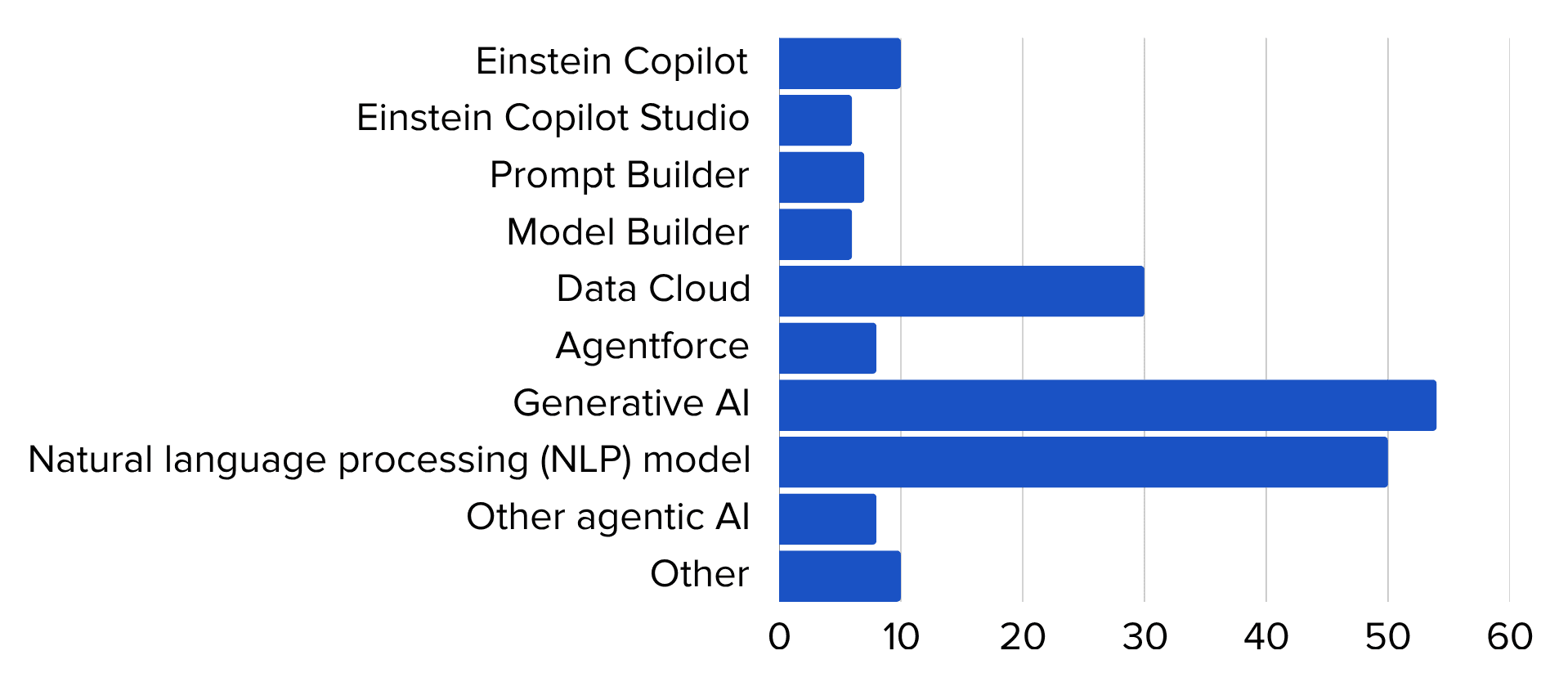
Despite these challenges, AI adoption is moving full steam ahead. While adoption of newer tools like Agentforce is limited, 54 percent of respondents report using generative AI tools at work, and 50 percent are working with natural language processing (NLP) models.
Other popular tools like Salesforce Data Cloud help bridge CRM and AI capabilities. But (and we’ll say it again), without trustworthy data as a foundation, these powerful tools risk producing unreliable outcomes.
Simply put, in the age of AI, bad data means bad decisions—and the risks are growing too big to ignore. If organizations want to unlock AI’s full potential, improving CRM data quality must move to the top of the priority list.
Executives are feeling the pressure when it comes to AI—and it’s speeding up AI adoption across the board. Facing tighter budgets, growing workloads, and the need to stay ahead of rapid innovation, leaders are turning to AI to fill the gaps.
29 percent of respondents at VP-level or above feel pressure to use AI as a replacement for hiring more headcount.
63 percent said AI is the key to staying ahead of competitors.
In 2025, CRM data isn’t just a business asset—it’s the backbone of every customer interaction, strategic decision, and AI initiative.
Yet our findings show a wide gap between businesses recognizing data’s value and investing in its quality and management.
Data ownership is fuzzy. Systems are disconnected, quick fixes are everywhere, and now AI is raising the stakes for data quality issues. Fast.
The silver lining?
Revenue-generating teams that rely on clean data will find a trusted partner in Validity.
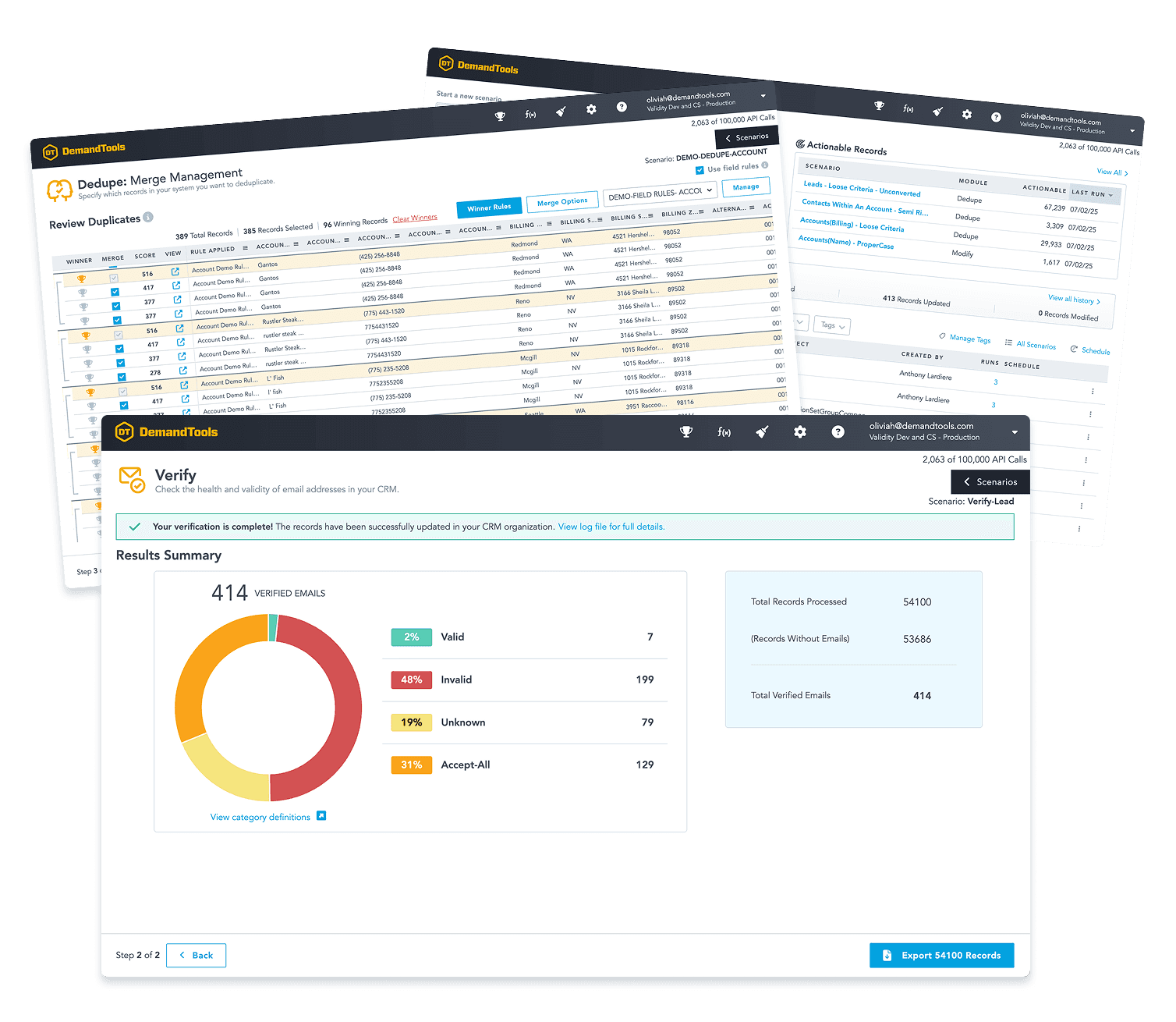
Validity DemandTools helps teams tackle recurring issues like duplicates, unstandardized records, and messy imports with bulk, automated processes.
Validity BriteVerify provides secure, scalable validation, so teams can build and maintain an actionable database, reach more people, and communicate more effectively.
Validity GridBuddy Connect makes it easier for teams to find and update their Salesforce data.
Learn more about Validity’s data management solutions or get a personalized demo from our data management experts today.
Schedule my demo